by Josie Fraser, Researcher & Writer for the Highland Good Food Partnership
There are a lot of aspiring farmers out there waiting for an opportunity to begin their dream of making a living off the land, but there are a number of barriers delaying this from becoming a reality. Our latest podcast took you through the financial and land access issues that new entrants face. On the other side of the equation, established farmers are challenged when it comes to what to do with their land when reaching retirement and they don’t have a successor or when they don’t have the capacity to manage the land themselves. There are various projects and methods out there trying to solve this equation with a solution that suits both new entrants and established farmers; and that make sure farmland stays in the right hands.
To learn about the subject and a few examples of the solutions out there, I spoke with a local farmer, Richard Lockett from Knockbain Farm, Dingwall who is just about to take on his first tenant farmer, and Cara Gillespie from the Scottish Farm Land Trust, an organisation which is paving the way for a new kind of farmland management.
What are the issues?
The average age of the Scottish farmer is 58 years old, and many don’t have a succession plan. While there are projects that try to match new entrants with retiring farmers such as for joint ventures and tenancies, there are not nearly enough farmers offering opportunities for the number of new entrants seeking them. So why are farmers so reluctant to offer these opportunities? Richard offered some insight: “There is an element of risk for a farmer to take someone onto their land as there is no guarantee that it will be a success. And some farmers, especially those nearing retirement age, aren’t willing to take that risk.” Richard also suggested that when farmers are ready to put their feet up, they don’t often have the capacity, whether it be energy or time, to try something new which is coupled with the fear of legislation required for things like tenancies.
Cara added to this and told me that, “Some farmers don’t have pension funds or successors in their family wishing to farm. This can lead to the farmer selling their land as they cannot physically or financially keep it. Some of this land, particularly in more marginal areas, can then be worth more to the purchaser for other purposes, such as forestry or housing development, which may result in land being converted away from food production.” Cara goes further: “Conversely, better agricultural land may be attractive to large scale farm businesses, which can access purchase capital and loans in a way that smaller-scale new entrants are unlikely to be able to.”
What are some of the ways to tackle these issues?
Richard recently succeeded his father as the main farmer at Knockbain Farm. The amount of land that Richard has taken over is greater than he wants to manage as he and his wife both work full time in other jobs and Richard has some other projects he wants to pursue. However, he, along with the other partners of the farm, did not want to sell any of the land. Richard is also very aware of the issues that new entrants face and wants to encourage those new to, or progressing in farming, to get the opportunity that so many of them seek.
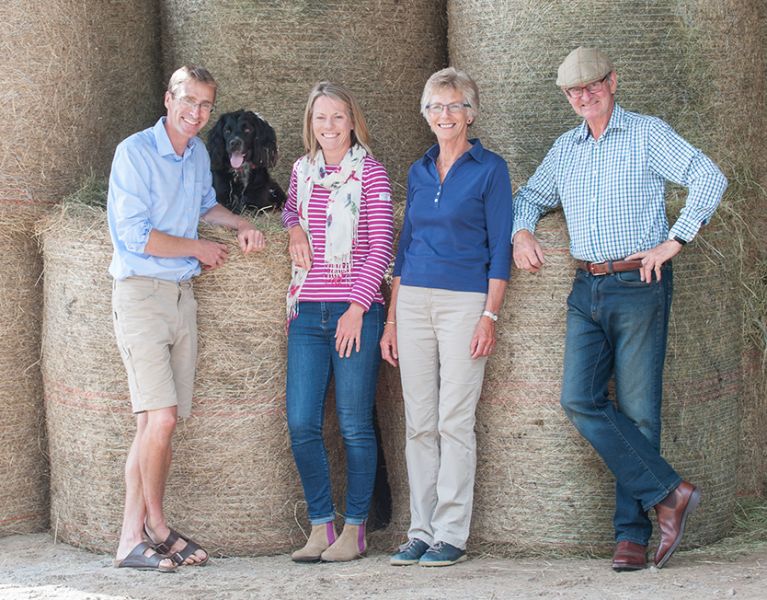
Two generations of farmers on Knockbain Farm, Dingwall
After consideration on the matter, Richard and partners decided to advertise a five year tenancy on their farm. Richard explained to me why that option was chosen: “A tenancy is not perfect but it is the best fit for our situation. A five year contract enables us to be confident that the tenancy will be a success and reduces the risks of being tied into a contract if it isn’t.” Richard recognises that people are turned off by the short-term nature of the tenancy but said that, “If it’s a success, we will extend the contract.”
By having a tenant working part of the farmland, Richard says it “makes life easier” as he will have the capacity to carry out his own projects which he tells me is a major benefit. He goes on to say that, “There is a great sense of satisfaction to be able to provide an opportunity to someone with a potential to build sustainable farming.” One of Richard’s main focuses on his farm is promoting biodiversity and supporting wildlife, a criteria he made clear he was looking for in a tenant.
The tenant also benefits as, “They have the opportunity to develop what they have started (or want to start) at a larger scale,” Richard explains. “The tenant will be in charge of the decisions on their land and is free to develop their business in whatever way they choose.”
Richard is not near retirement, but he has recognised early on that he can’t manage all of the land between only him and his wife. This gives him time to try a tenancy as a possible solution for his farm. A solution for farmers who don’t have a successor in their family, could be to think about these issues earlier on, like Richard, in order to have the capacity and less time-related pressure to get someone onto the farm, as well as to tackle scary legislation before putting up their feet. Richard’s advice to other farmers finding it difficult to make a plan for their farm is, “Take advice. There are so many good people out there who would be happy to help. Look at all the examples and one will fit the bill for you.”
What about for farmers who can no longer keep their land?
Another option for farmers is to donate, sell or broker their land through a Land Trust. This is common in other countries, however, the Scottish Farm Land Trust is seeking to break new ground as the first of its kind here in Scotland. “We want to see our farming system thrive, with a greater diversity of farmers and business models. Widening access to land is essential for this to happen,” Cara explains. She adds, “Our fundamental aim is to acquire farmland and hold it in trust, in order to offer long term secure tenancies to new entrants.”
Focusing on long-term tenancies would allow the Trust to support farmers who may be seeking to invest in land and soil management practices over a long-term, such as agroecological new entrants. And while the Scottish Farm Land Trust proposes long term tenancies, Cara points out that those which are short-term can also work and that, “much depends on the quality of conversation and establishing a shared vision between landowner and tenant.”
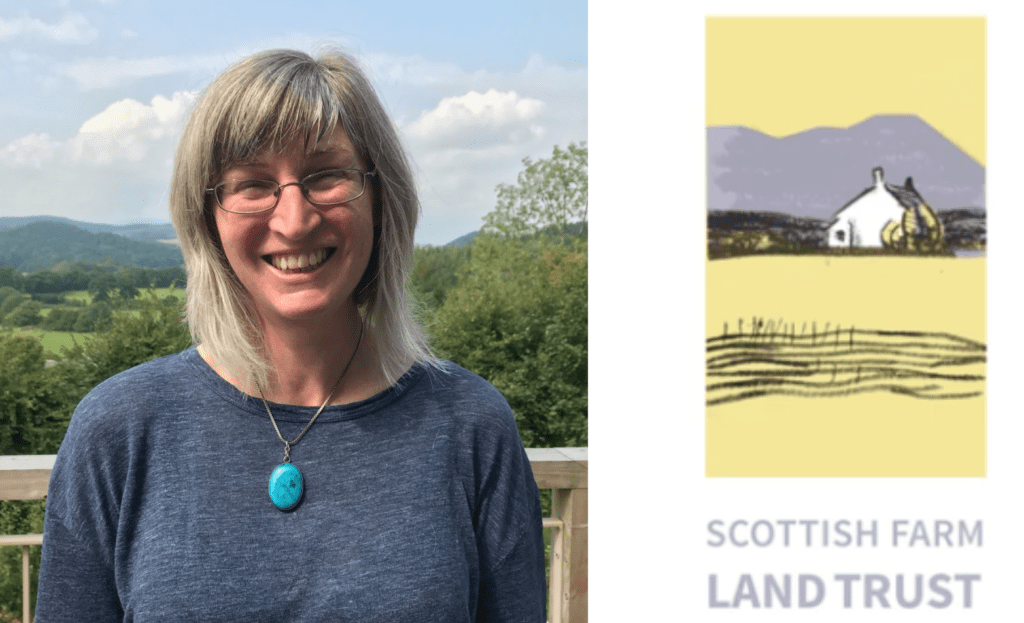
Cara Gillespie, Development Coordinator for the Scottish Farm Land Trust
There is no lack of demand for what the Scottish Farm Land Trust are trying to achieve. In 2017, they carried out a survey where they found that an overwhelming 989 people in Scotland wanted to establish agroecological farm businesses of which 71% said that access to land is the biggest barrier they face. Cara says, “There is clearly a lot of public support for this vision- as demonstrated also by our highly successful crowdfunder in 2019.” The Scottish Farm Land Trust are currently developing their own detailed plans with the aim of ‘going live’ in 2021.
Land going from farmers into the hands of a Land Trust has benefits to both farmers and new entrants. Farmers passing on their agricultural land, however they do it, can save themselves from the heartache of their life’s work, and perhaps that of generations before, being torn apart and transformed away from agricultural use. Instead they can rest assured that their work will continue to be built upon by the next land worker who, with access to land through the Land Trust, benefits from having a shot at achieving their dream.
Cara and Richard’s visions for a good food system in Scotland and specifically in the Highlands are very similar. Cara tells me, “I personally want to see an increasingly resilient local food system for production and supply, with producers and consumers much more closely linked at local community level and a diversity of opportunities within that.” Richard agrees and says he is looking for, “more connections between producers and consumers.” He adds, “Food produced in the Highlands is excellent and there are great examples out there of people who have this connection.”
There are certainly some barriers needing broken down for new entrants, farmers and consumers to come together and support one another in the local food system. There are a variety of complex issues which are shared between land workers, as well as those unique to each of them. However, a big movement has undeniably begun, with shifting opinions, new projects and incredible organisations all working towards a common goal — a strong, resilient and fair food system.
To find out more about what’s happening at Knockbain Farm, go to their website.
To find out more about the Scottish Farm Land Trust, visit their website.